Science
Science Intent at St Francis Xavier
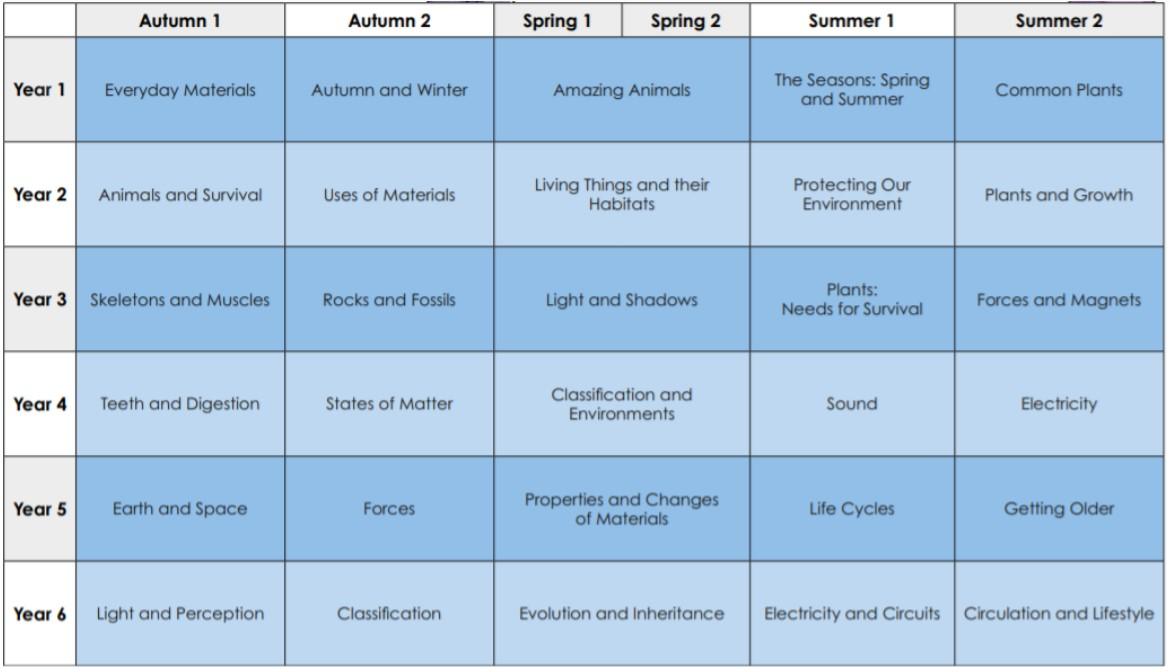
At St Francis Xavier, it is our intention that every child develops a secure and meaningful body of scientific knowledge and an understanding of how science helps us to explain the world around us. Our fully resourced, knowledge-rich curriculum provides children with the foundational knowledge, vocabulary and scientific understanding needed to support future learning.
Science is taught through the disciplines of biology, chemistry and physics, developing children's curiosity, interest and enquiry about the natural and humanly constructed world. Children are encouraged to ask questions, make observations, seek patterns, classify and compare, carry out fair tests and other appropriate investigations, and use secondary sources to research scientific questions.
Alongside substantive scientific knowledge, children develop their ability to work scientifically. They learn to observe carefully, measure, record and interpret data, identify patterns, draw conclusions and use evidence to explain their ideas. Working scientifically is embedded within the teaching of scientific content rather than taught as a separate strand.
As children progress through the school, new learning builds systematically on prior knowledge. Teachers identify and address misconceptions and deliberately revisit important knowledge and vocabulary so that children's understanding becomes increasingly secure and can be retrieved and applied in new contexts.
We aim for every child to leave St Francis Xavier with a strong scientific foundation, confidence in using scientific language, an understanding of how scientific knowledge is developed and a sense of curiosity, awe and respect for the world around them.
Year 4: Electricity


Year 5- Filtration


In Science, Year 5 have been learning about how we can separate mixtures using filtration. We used tea leaves, a funnel, filter paper and beakers to investigate. First, we mixed together tea leaves and water. Then, we poured the mixture into the filter paper to separate the leaves from the water. We had great fun!
Year 4- Spring 1: All living things


Year 1 - Autumn and Winter


Year 1 - Everyday materials


Year 4- Sound


Year 3 - plants and their survival


Year 5 - Plants


Year 3- exploring rocks


For our first Science lesson we explored what a rock is. We conducted an investigation where we explored the three different types of rocks. We described how they felt and made predictions on what type of rock we thought it was.
Year 4 - Teeth and Digestion


Year 3: Skeletons and Muscles


Y2: Materials
Year 1: Materials


Year 5: Earth and Space


Year 2 - 'Plants and Growth'


Year 2 have been comparing soaked beans and dry beans. They dissected some runner beans to find out what is inside them.
Year One plants


For our Science topic of Plants Year One explored the different parts of a plant. They each had their own plant that they got to touch and dissect. We felt the petals, the stem, the roots, the soil and the leaves. Then we labelled the different parts of a plant in our books.
Year Three loved their Science trip to Magna!


Year 4 Magna Trip (Big Circuits workshop)


Year 5 - Life Cycles


This half term we have been learning about life cycles in Science lessons. We have used various scientific skills in this unit including asking questions, drawing conclusions, recording data and using sources.
Year 2 - 'Protecting Our Environment'


Understanding The World: Planting Beans


In Nursery we planted our own magic beans. We talked about how to look after the bean plants and prepared to watch them grow.
Year 4 - Sound


Year 4 have been busy investigating how Sound travels and how different materials absorb sound as well as what can affect the volume of a sound.
Year 3- Does light travel through all materials?


For our science lesson we were looking at how light travels through materials. We learnt the new vocabulary of opaque, translucent and transparent and their meaning. Using torches we shone the light through different materials to see if they were opaque, transparent and translucent. Finally we ordered the materials from the one that allowed the least light to pass through (opaque) to the one that allows the most light to pass through (transparent).
Year 3: Light


Science in Year 2 - Habitats


Year 6: Evolution


Year 5: Materials


Nursery - Float and Sink


In Nursery the children have been learning about what objects float and what objects sink. We watched a very interesting video and learnt lots of new things. The children then took what they had learnt and put it into practice. They gathered around the water area and chose different objects. The children then guessed which objects would float and which objects would sink. This was a very fun experiment!
Year 1; Amazing Animals


Year 4: Classification and Enviroment


In Science, Year 2 have been learning all about habitats.


